E6 Experimental Area
Contact Person: Petru Ghenuche [ petru.ghenucheeli-np.ro ]
The E6 Experimental Area of ELI-NP was commissioned and set in operation in 2024 for electron acceleration experiments. For the current User Call, the system is optimized for running long focal experiments with a single 10 PW beam, as two-beam synchronization is not yet available.
Laser parameters
| Parameters | Values | Comments |
|---|---|---|
| Laser beam diameter (FWHM) | 500 mm | Laser Beam B |
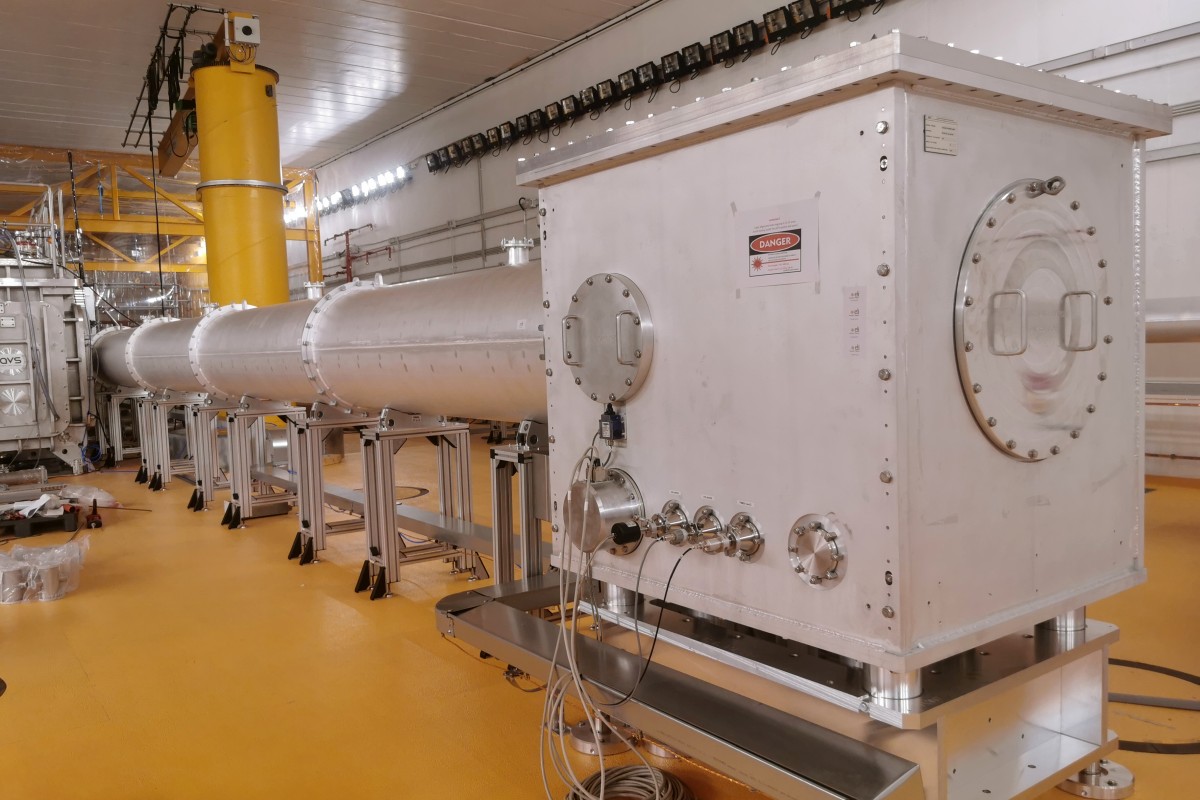
| Spherical mirror | F/60, f=30 m, 0 degree | Enhanced Ag |
| Focal size (FWHM) | ~60 um | |
| Laser energy | Maximum 240 J | Post compression <10PW |
| Repetition rate | 1/60 Hz, single-shot | |
| Pulse width | 23 fs - 1 ps |
Experimental chamber
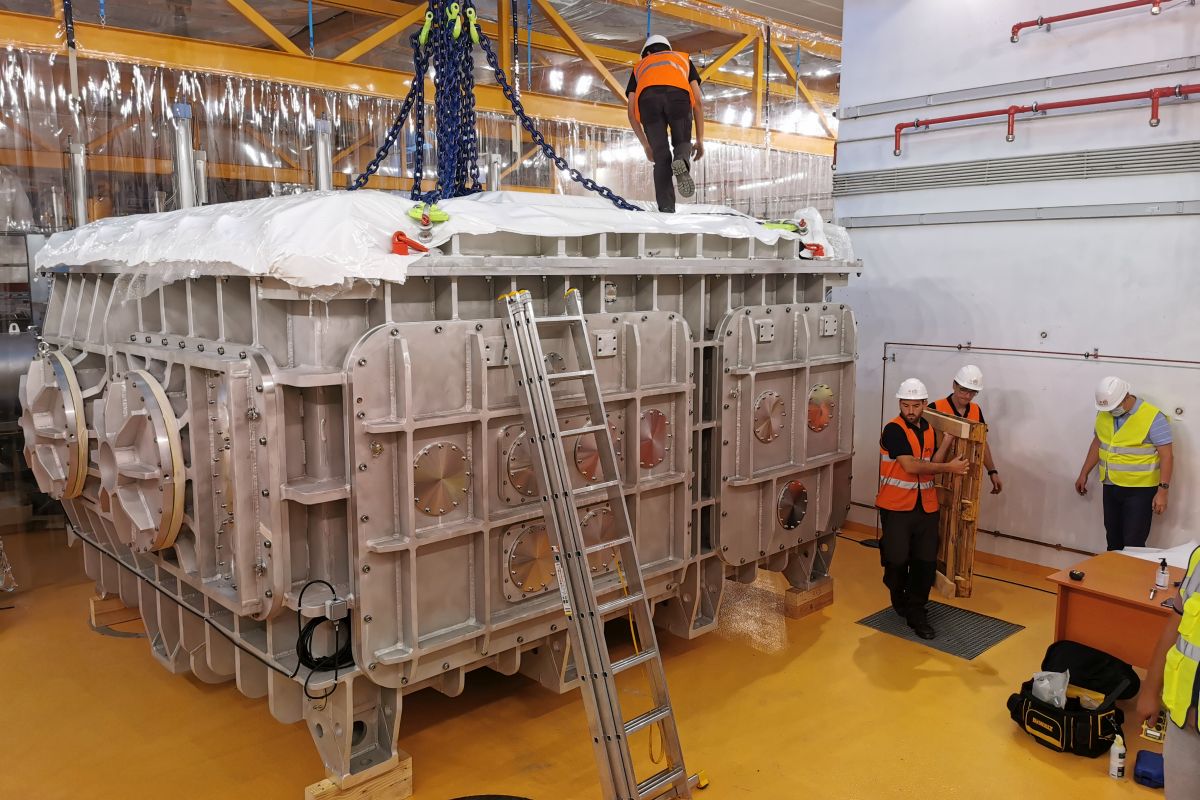
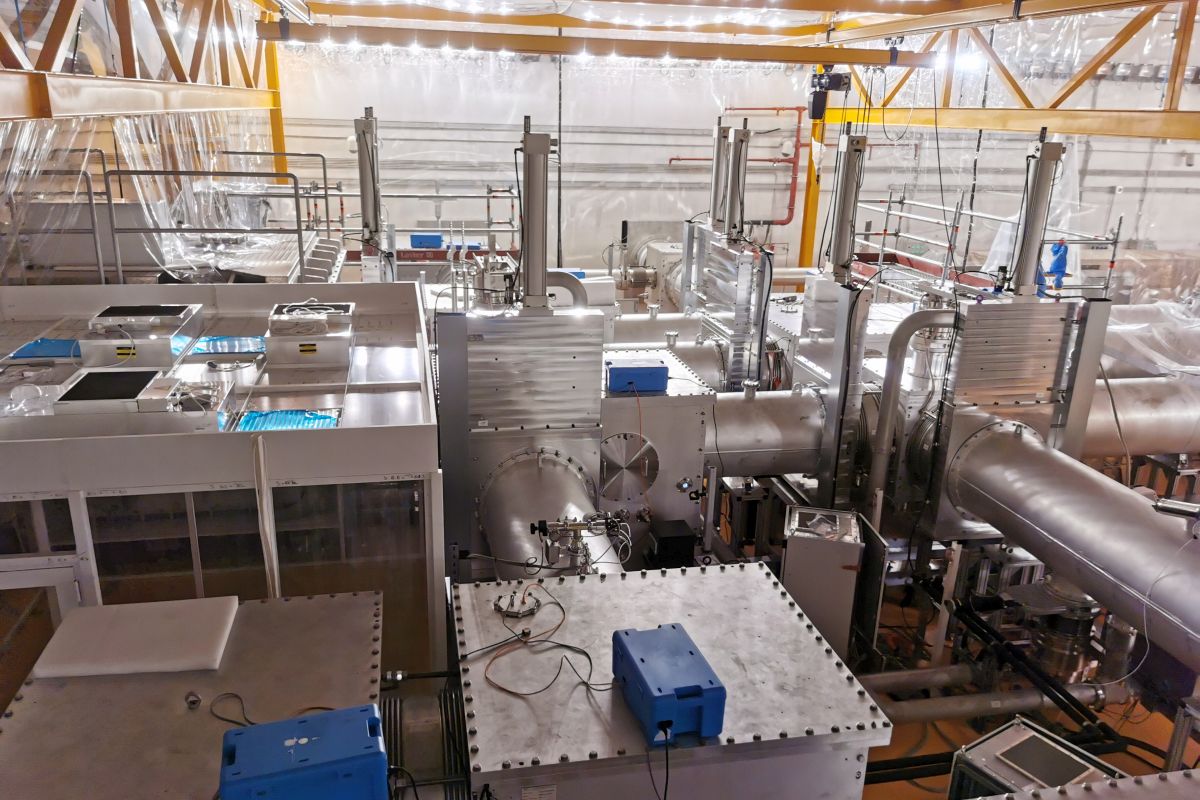
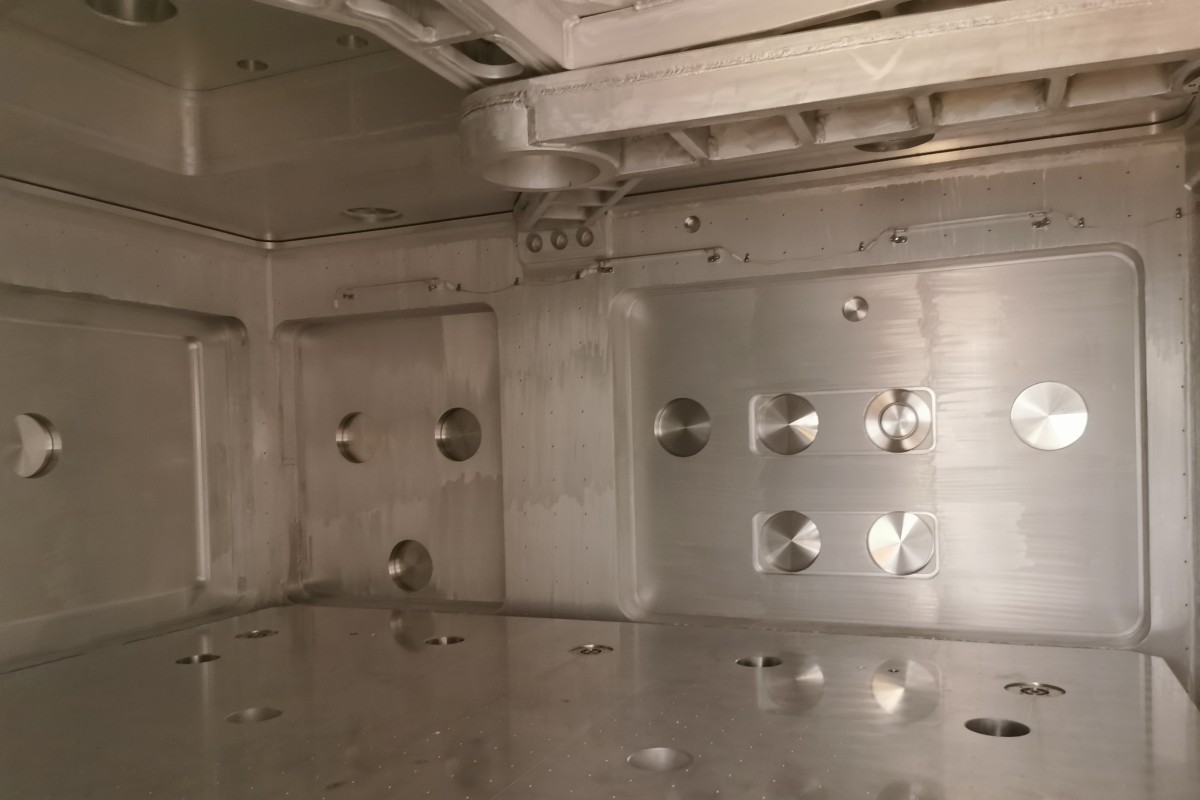
Made of aluminum, the E6 interaction chamber is approximately 5 m in length x 4 m in width x 2 m in height. The laser beam optical axis is 800 mm from the optical table and 1,500 mm from the floor [D. Doria et al. 2020, K. A. Tanaka et al. 2020]. Several optical tables are available outside the interaction chamber for diagnostics (Figure 1).
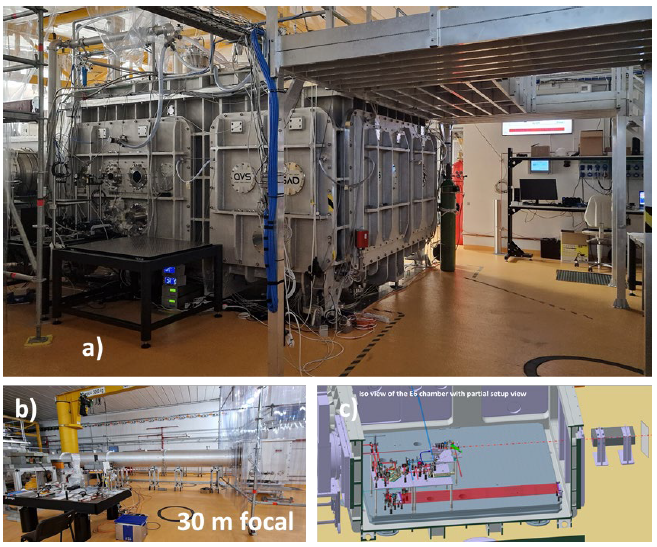
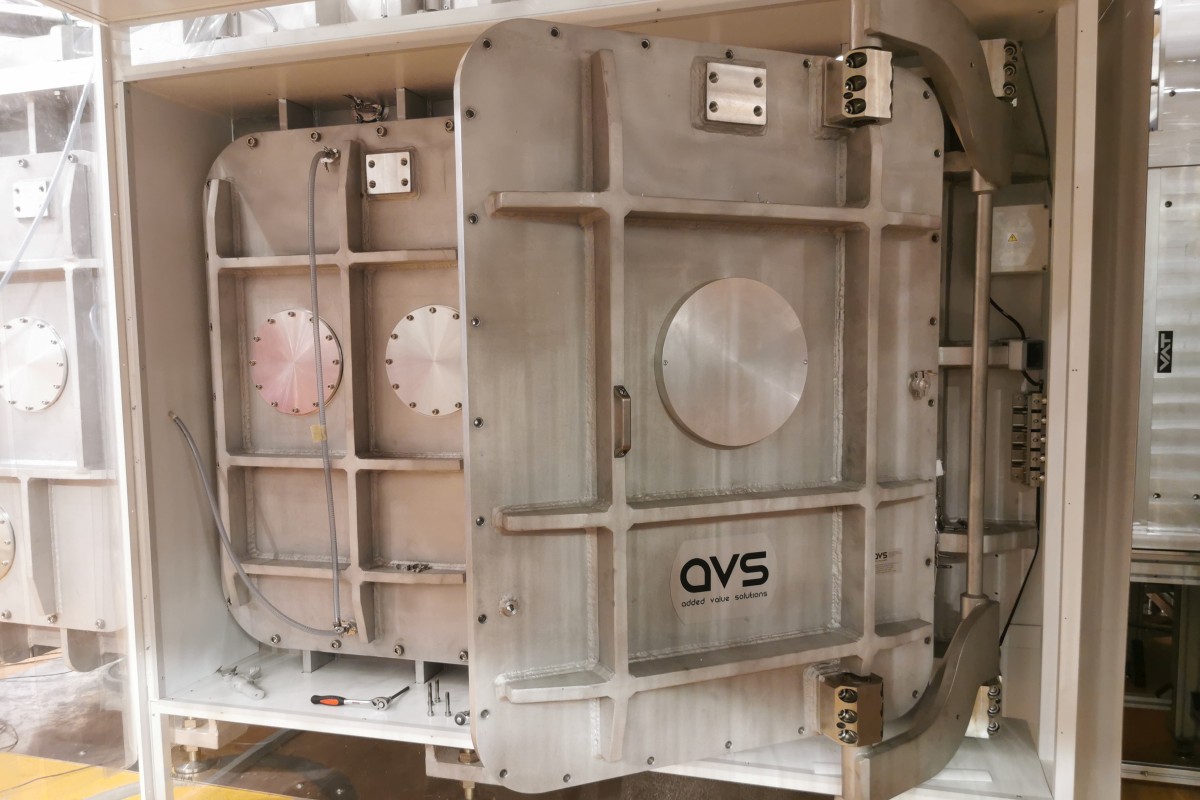
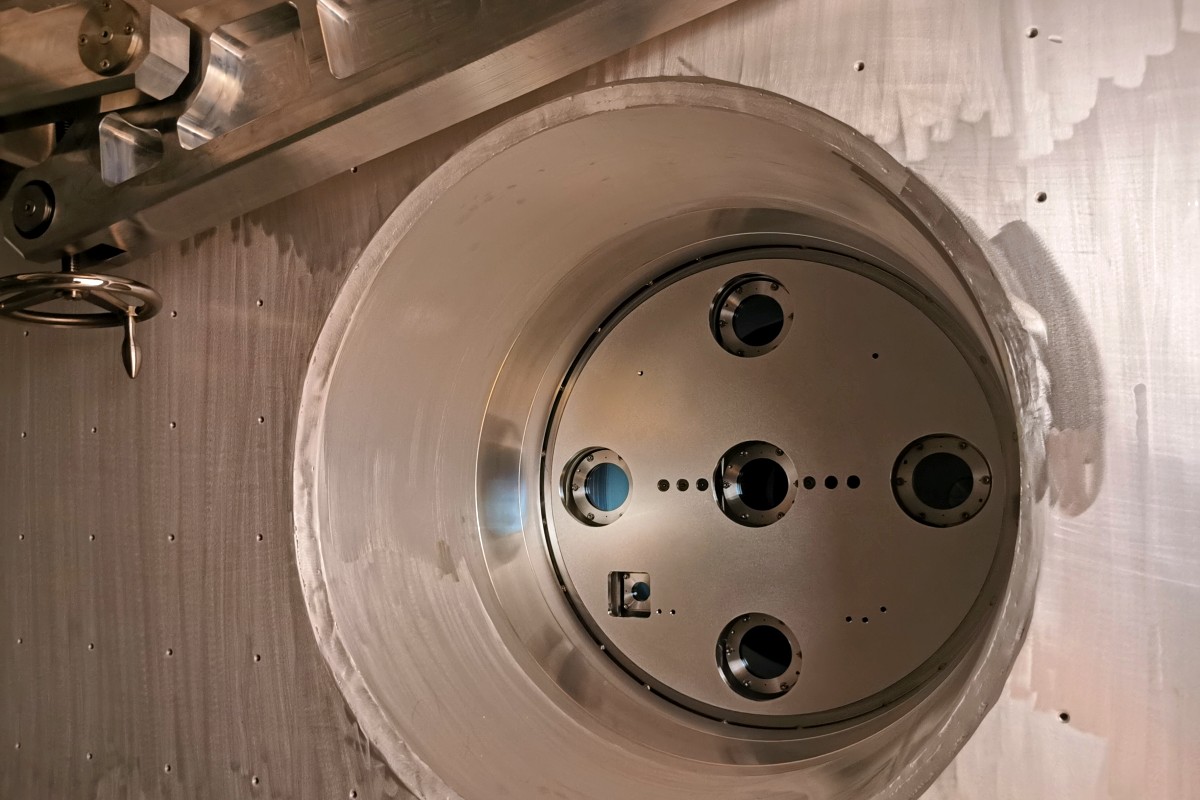
Figure 1: a) Overview of the E6 Experimental Area of ELI-NP; b) 30 m long focal mirror vacuum enclosure; c) CAD design of a possible electron acceleration setup.
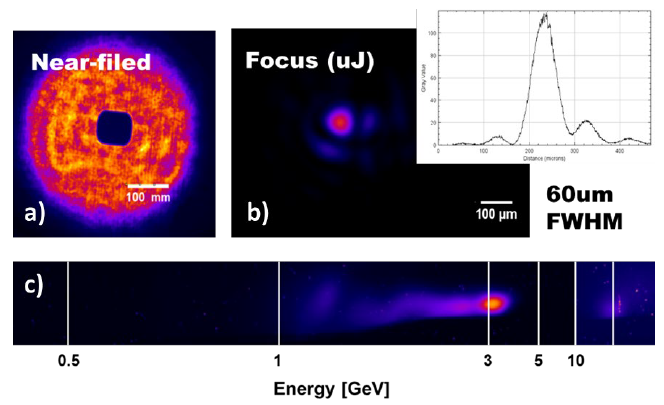
Figure 2: a) Near-field and b) laser focal spot obtained in the E6 interaction chamber; c) Typical electron spectra obtained with a 15 mm gas jet.
Laser alignment and target manipulation
- Alignment laser: CW 800 nm (FAL laser from HPLS);
- 5X to 10X objective alignment system, 1 μm spatial resolution target motion.
Laser diagnostics
- Far-field, near-field, energy, spectrum, pulse duration measurements (FROG), back-reflection monitor at full power.
Particle detection
- e- Spectrometer for high energy electrons: up to multi-GeV (800 mm, 1 T, 30 mm gap magnet);
- Optical spectrometer: ANDOR Shamrock (VIS), UV-Vis-NIR spectrometer with optical fiber;
- Emission monitors.
Triggers
- The triggers from the main laser system are available from -100 ms, then a local delay generator can be used for more precise triggers in the E6 Experimental Area (i.e. a Stanford Research Systems DG645 unit, manual available at https://www.thinksrs.com/downloads/pdfs/manuals/DG645m.pdf
Cleanroom requirements
- The E6 Experimental Area has not been officially certified as such but has a cleanliness equivalent to the ISO-8 standard, while an ISO-7 soft-wall cleanroom is also present and available for use. All of the components brought in by the users for performing their experiment must observe these cleanliness standards.
References
- Doria, Domenico, et al. "Overview of ELI-NP status and laser commissioning experiments with 1 PW and 10 PW class-lasers." Journal of Instrumentation 15.09 (2020): C09053
- Tanaka, K. A., et al. "Current status and highlights of the ELI-NP research program." Matter and Radiation at Extremes 5.2 (2020)